Skip to Content

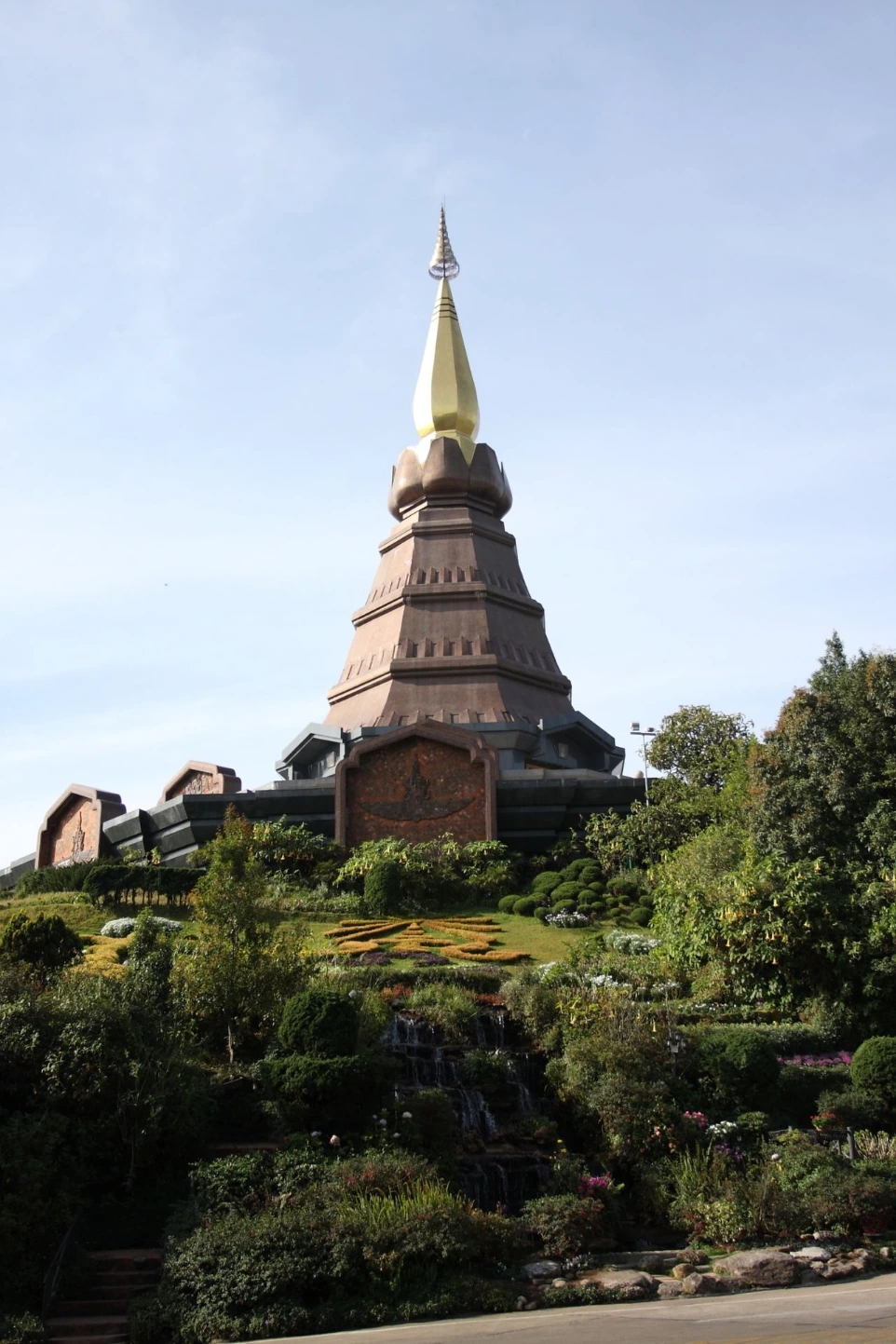
Phramahathat Nabhamethanidol

Phramahathat Nabhamethanidol.
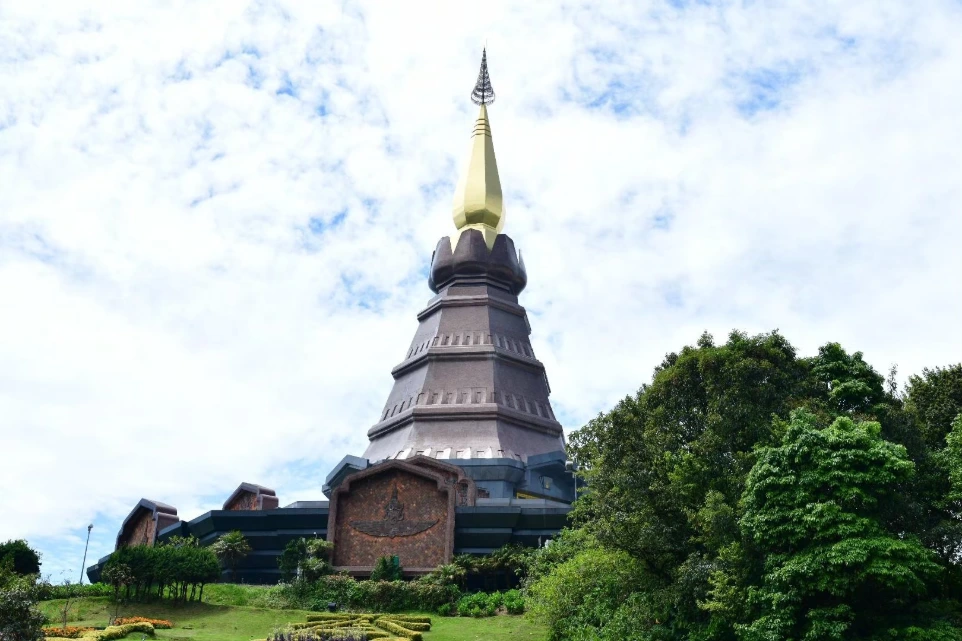
"The construction of the Air Force stupa dedicated as a royal merit has been named as requested by the Air Force 'Phramahathat Nabhamethanidol', which translates to a stupa that houses the great relics as vast as the sky above and the earth below."

Executive Committee for the Construction of the Phramahathat Stupa

History

On the occasion of the Air Force's 72nd anniversary on March 27, 1987, coinciding with the auspicious occasion of His Majesty the King's 5th birthday celebration on December 5 of the same year, Air Force officials, led by Air Chief Marshal Phanthakan Thappathame, the Commander of the Air Force, and senior officers jointly decided to donate funds to create a memorial object to celebrate this important occasion of the Air Force and to dedicate it as royal merit on this auspicious occasion.
The joint effort to donate resources for the construction of a memorial object to promote the great honor of the monarch, which aligns with the auspicious occasion of the 5th cycle of his reign, including the declaration of the great honor that will outlast any monarch, on July 2, 1988, nothing can compare to the construction of the stupa that houses the relics of the Buddha, which all people can witness. It is clear that, in addition to maintaining the position as the supreme patron of Buddhism, especially in supporting and nurturing Buddhism to flourish more than any previous reign, he also has a deep belief in Buddhism, not only in offering worship to Buddhism in the form of offerings but also in practicing Dharma. He sincerely believes in meditation to achieve the true reality.
The construction of the stupa by the Royal Thai Air Force, dedicated humbly as a merit for the King, is the only way the Air Force can commemorate the great benevolence of His Majesty the King at the highest level. Although it cannot compare to the power and greatness of the righteous monarch that extends across the land and reaches the sky, the location for this stupa should be at the highest point on Thai soil that the Air Force can build, in honor of the great benevolence, great compassion, and great purity of His Majesty the King, so that it may reside at the highest point and in the hearts of all people.

The Royal Thai Air Force has chosen the peak of Doi Inthanon, which is the highest mountain in Thailand, as the site for the construction of the stupa. Later, the King graciously bestowed the name, as requested by the Air Force, "Phra Mahathat Dhamma Metadon," which translates to the stupa that enshrines the relics of the Buddha, reaching up to the heavens.


Background

In 1985, Air Chief Marshal Praphan Thuphatemi, the Commander of the Royal Thai Air Force at that time, had the idea to build a stupa in the Doi Inthanon area to preserve the sacred relics entrusted to his care, with the intention of allowing the general Buddhist public the opportunity to pay their respects. He consulted with Air Vice Marshal Woranat Apichatree, the Deputy Chief of Staff of the Air Force (at that rank and position at the time), to help consider the construction site. In late November 1985, Air Vice Marshal Woranat, along with Air Commodore Prasert Datchanukul from the Air Force Headquarters, Air Vice Marshal Prasart Thaveesuk, head of the surveying and mapping department of the Air Force, and two architects from the Ministry of Public Health, Khunying Khaisri Tansiri and Khun Tanti Chaisombat, traveled to assess and select the construction site. Air Vice Marshal Watchara Yukthanan, the commander of the control and reporting center at Doi Inthanon at that time, led the survey and selection from areas previously considered suitable in terms of the stupa's landscape once completed and the geographical position that would be convenient for Buddhists traveling to pay their respects from the Chom Thong-Inthanon road. The survey team considered two locations on a small peak running parallel to the left side of the Chom Thong-Inthanon road, about 4 kilometers away. The first location was at the lower end of the peak, which, if construction of the stupa could proceed, would be beautiful because the stupa would be visible from a distance and very close to the road. However, unfortunately, the peak area was narrow, limiting the space available for stupa construction. Therefore, they considered a second location along the same line, further up and not far from the road. This second location was wide enough to be adapted for the stupa. The survey team decided to choose the second location for construction and would have the surveying and mapping department of the Air Force conduct further detailed surveys for consideration.


Request for permission to use the area for construction

In constructing the stupa in the Doi Inthanon National Park area, it is necessary to request permission from the National Park Committee first. In this matter, the Royal Thai Air Force sent a letter dated February 10, 1986, to the Director-General of the Department of Forestry to request permission to use the selected area for the construction of the stupa, along with a bridge, road, and parking area, covering an area of approximately 18 rai, 2 ngan, and 45 square wah.
Subsequently, the Department of Forestry sent the matter to the Chiang Mai Provincial Forestry Office to verify the information for presentation to the National Park Committee for consideration of permission. When the Department of Forestry did not receive the details as requested, this matter was brought up for discussion at the National Park Committee meeting No. 3/2529 on July 17, 1986, where the committee considered and agreed in principle to allow the Royal Thai Air Force to construct a stupa to house the relics at the requested location. Additionally, the Royal Thai Air Force sent further details to the Department of Forestry on September 5, 1986. Later, the Royal Thai Air Force also sent a letter dated October 4, 1986, proposing an environmental impact assessment report for the stupa construction project housing the relics in Doi Inthanon National Park for the Secretary-General of the Environmental Committee to consider. The National Environmental Committee informed the Director-General of the Department of Forestry on January 20, 1987, that it had approved the report proposing measures to prevent and reduce environmental impacts, along with follow-up measures.


Preparation of the area for leveling the ground, construction of a parking lot, and a bridge.

When a team of 17 people, led by Colonel Sombat Sukonthong, along with 8 pieces of equipment, entered the area to set up a temporary camp at kilometer 31 on the Chom Thong-Inthanon Road, they began work immediately. In early May 1986, the Royal Thai Air Force's Department of Civil Engineering received orders to construct roads and parking lots, as well as clear sloped areas for the stupa construction. The Department of Civil Engineering then moved personnel and equipment to create temporary accommodations at kilometer 21 of the Chom Thong-Inthanon Road, completing the move around May 20, 1986. Staying on the slope was very difficult because in June it rained almost every day, along with strong winds of 40-50 knots. The constant rain forced workers to wear warm clothing all day. On rainy days, they had to find shelter under temporary huts. Using heavy machinery to clear the area was also risky due to the potential for accidents. Refueling had to be done by porters who transported fuel from the road up the slope, as the temporary path was slippery and vehicles could not go down to refuel.


When a team of 17 people led by Colonel Sombat Sukonthong, along with 8 pieces of equipment, entered the area to set up a temporary camp at kilometer 31 on the Chom Thong-Inthanon Road, they began working immediately. In early May 1986, the Royal Thai Air Force's Department of Civil Engineering received orders to construct roads and parking lots, as well as to clear sloped areas for the construction of a pagoda. The Department of Civil Engineering then moved personnel and equipment to create temporary accommodations at kilometer 21 of the Chom Thong-Inthanon Road, completing the relocation around May 20, 1986.
Resting on this hillside is very difficult because in June, it rains almost every day, along with strong winds of 40-50 knots. There is a constant drizzle, forcing workers to wear jackets all day. On rainy days, they have to find shelter under temporary huts. Using machinery to clear the area is also risky due to the fear of accidents. Refueling requires people to carry fuel from the road up the hill because the temporary path is slippery, and vehicles cannot go down to refuel.
The construction involves about 10 technicians and approximately 12 laborers, along with about 25 supervisors. Work starts at 7:30 AM and ends at 5:00 PM, but sometimes they may work until 8:00 PM. During this time, there is some rain, but not enough to hinder the work. They began digging the first foundation pit, pouring concrete for the foundation, and setting up columns to support the bridge from sections 1, 2, and 3 until reaching the fourth or final foundation pit. Once the foundation pit is dug, they need to place steel mesh as reinforcement for the foundation. The steel mesh has been tied together and requires about 8 people to lift it, so they use an excavator instead. Each time they lift, using the excavator to lift the steel mesh is challenging because it is 2.50 meters wide and 7 meters long. If not lifted correctly, it may swing due to the height of the excavator's boom and the steel cable hanging down to the steel. The workers collaborate to manage the lift until it is completed and must place it in the foundation pit, which is about 20 meters away.


Meaning in shapes and components.

In 1985, Air Chief Marshal Praphan Thaptemee, the Commander of the Royal Thai Air Force at that time, had the idea to build a stupa in the Doi Inthanon area to preserve the sacred relics entrusted to his care, with the intention of allowing the general Buddhist public the opportunity to pay their respects. He consulted with Air Vice Marshal Woranat Apichatree, the Deputy Chief of Staff of the Air Force (his rank and position at that time), to help consider the construction site. In late November 1985, Air Vice Marshal Woranat, along with Air Commodore Prasert Datchanukul from the Air Force Headquarters, Navy Air Marshal Prasart Thaveesuk, head of the surveying and mapping department of the Air Force, and two architects from the Ministry of Public Health, Khunying Khaisri Tansiri and Khun Tanti Chaisombat, traveled to consider and select the construction site. Air Navy Marshal Watchara Yukthanan, the commander of the control and reporting center at Doi Inthanon at that time, led the survey and selection from areas previously considered suitable in terms of the landscape of the stupa once completed and the geographical position that would be convenient for Buddhists traveling to pay their respects from the Chom Thong-Inthanon road. The survey team considered two locations on a small peak running parallel to the left side of the Chom Thong-Inthanon road, about 4 kilometers away. The first location was at the lower end of the peak, which, if construction of the stupa could proceed, would be beautiful because the stupa would be visible from a distance and very close to the road. However, unfortunately, the peak area was narrow, limiting the space available for the construction of the stupa. Therefore, they considered a second location along the same line, further up and not far from the road. This second location was wide enough to be adapted for the stupa. The survey team then decided to choose the second location for construction and would have the surveying and mapping department of the Air Force conduct further detailed surveys for consideration.


Project operations.

In 1985, Air Chief Marshal Praphan Thupatemi, the Commander of the Royal Thai Air Force at that time, had the idea to build a stupa in the Doi Inthanon area to preserve the sacred relics entrusted to his care, with the intention of allowing the general Buddhist public the opportunity to pay their respects. He consulted with Air Vice Marshal Woranat Apichatree, the Deputy Chief of Staff of the Air Force (at that time), to help consider the construction site. In late November 1985, Air Vice Marshal Woranat, along with Air Commodore Prasert Datchanukul from the Air Force Headquarters, Navy Air Marshal Prasart Thaveesuk, head of the surveying and mapping department of the Air Force, and two architects from the Ministry of Public Health, Khunying Khaisri Tansiri and Khun Tanti Chaisombat, traveled to consider and select the construction site. Air Navy Marshal Watchara Yukthanan, the commander of the control and reporting center at Doi Inthanon at that time, led the survey and selection from areas previously considered suitable in terms of the stupa's visibility when completed and the geographical location that would be convenient for Buddhists traveling to pay their respects from the Chom Thong-Inthanon road. The survey team considered two locations on a small hill running parallel to the left side of the Chom Thong-Inthanon road, about 4 kilometers away. The first location was at the lower end of the hill, which, if construction of the stupa could proceed, would be beautiful because the stupa would be visible from a distance and very close to the road. However, unfortunately, the hilltop area was narrow, limiting the space available for the construction of the stupa. Therefore, they considered a second location along the same line, further up and not far from the road. This second location was wide enough to be adapted for the stupa. The survey team decided to choose the second area for construction and would have the surveying and mapping department of the Air Force conduct further detailed surveys for consideration.


Timeline of the Phra Mahathat Chedi at Doi Suthep


November 1985

Background

Air Chief Marshal Prabhan Thupatemi, the Commander of the Air Force at that time, conceived the idea of building a stupa in the Doi Inthanon area.


November 13, 1985

Establishment of a working group

Appoint the construction committee for the stupa containing the relics of the Buddha.


May 1986

Construction of Phra Mahathat Nopphametdil begins.


December 5, 1986

Laying of the foundation stone ceremony.

The foundation stone ceremony was held as scheduled at 10:49 AM.


September 1987

Construction of Phra Mahathat Noppholmetdil is completed.


January 1988

The name of the stupa is granted.

The name of the stupa containing the relics of the Buddha is granted as “Phra Mahathat Nopphametdil,” which means the stupa containing the great relics as vast as the sky and the earth.